
Celebrating the Life and Activism of Dr. Ora Mobley Sweeting
February 19, 2026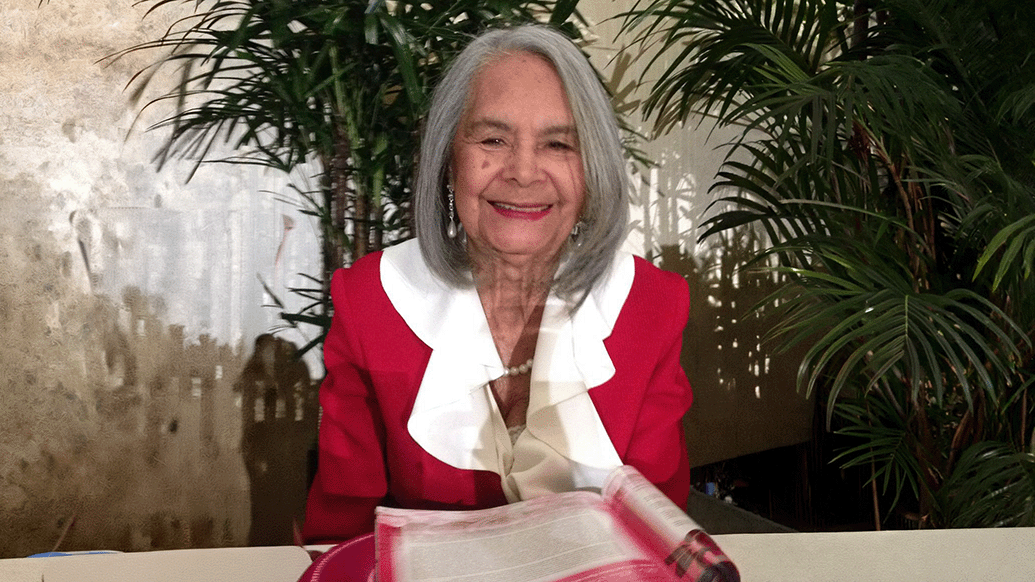
Categories: Blog Post
When you meet Dr. Ora Mobley Sweeting, her kindness is the first thing you sense. Soon after, her quiet strength emerges. Raised in Monroe, North Carolina, she grew up under the care of her aunt, Mama Cora, a pillar of her community who helped raise 19 children after Dr. Sweeting’s mother passed away. Mama Cora also cared for Robert F. Williams, who would become a prominent civil rights leader. In their home, education and Black history were daily lessons, planting early seeds of activism for the children.
Education was vital in her family. Her father was one of six boys who all attended college, an uncommon achievement at the time. This upbringing shaped her desire to teach, care for others, and stand up when something wasn’t fair.
After graduating from Johnson C. Smith University in Charlotte, Dr. Sweeting moved to Whiteville to teach. Following Mama Cora’s example, she “went off script,” as her daughter, Candida, says, by teaching Black history even when it was unsafe. When the school board ordered her to stop, her students held a sit‑in to defend her. The protest drew the attention of the Ku Klux Klan, and her life was threatened. She was arrested “for the crime of educating,” as Candida explains. A group of Black doctors posted her bail, and she was told she could either stay and face jail time or leave North Carolina. In 1951, she left for safety.
Dr. Sweeting settled in Harlem, where her activism flourished. As a young mother, she wanted children in her community to grow up safe, supported, and heard. She founded the Central Harlem Mother’s Association, which worked for nearly 30 years to improve school conditions, shut down unsafe bars, close hazardous roads near school buildings, advocate for equal job opportunities, and ensure Black students had a voice.
She also led the St. Nicholas Tenants’ Association, helping public‑housing residents secure safer buildings and access state services like food assistance. Believing that children of color should be celebrated, she created “The Pursuit of Excellence Pageant,” inviting students from kindergarten through 12th grade to wear caps and gowns and receive a “Certificate of Excellence”, because no achievement was too small.
Some of her most enduring moments are now part of Harlem’s story. After helping rename the neighborhood school the Harriet Tubman School, she fought to protect students from dangerous traffic. When the city refused to act, she lay down in the street between two kitchen chairs to block cars. Candida remembers a police officer stepping over her mother to arrest her. Dr. Sweeting told him, “When you stepped over me, you stepped over every mother in Harlem ... That’s who you’re looking at right now.” The city eventually closed the nearby streets during school hours thanks to her actions.
Over roughly three decades, Dr. Sweeting served on the Executive Board of P.S. 157, a local public school, and helped launch Harlem’s first Decentralization Community Control movement so schools would better reflect the needs of local families. Threats related tot this work eventually led her to move to California in 1990.
In 2019, after nearly 70 years away, Dr. Sweeting returned to North Carolina. She joined our North Carolina PACE program in 2023, where her journey has come full circle. PACE helps seniors remain independent and stay connected to the communities they love by providing coordinated medical care, transportation, rehabilitation, social activities, and daily living support. Through these services, we are honored to care for leaders like Dr. Sweeting with dignity, and proud to serve the people who helped build the foundations of our communities.
Today, Dr. Sweeting is surrounded by peace, support, and connection. Her daughter says, “I must tell you mom is aging backwards. She said, “I feel like I'm 16.’ … So, something wonderful is happening here!”
Get new insights like this in your inbox
Subscribe for the latest blog posts, practical tips, and updates. Sent occasionally, not daily.